After severe weather: helping your co-ownership get back on track, one step at a time
A stain on the ceiling, a gate that no longer responds, a lift out of service: after heavy rain, questions tend to arrive all at once. For a co-ownership, it helps to separate immediate safety concerns from documenting problems and following them through.
On 11 and 12 November 2026, Storm Charles affected several regions of Morocco, bringing rain and strong gusts, as Médias24 reported on 12 November. In a statement dated 11 November, ONEE also described damaged power lines and outages in several Casablanca neighbourhoods. Every building's situation is different. Here is a way to organise the next steps without assuming that all damage has the same cause.
First, protect people
If a place appears dangerous, move away and prevent access as far as possible without putting yourself at risk. Water leaking near electrical equipment, an object in danger of falling or a flooded area calls for an appropriate response. Alert the relevant services or a qualified professional, depending on the situation; do not handle wet electrical equipment or climb onto the roof to inspect it yourself.
Let neighbours know which area to avoid and who has been contacted. If someone is in immediate danger, contact the appropriate emergency services. Photos can wait until the area is safe. For future episodes, consult the Directorate General of Meteorology's safety advice and instructions from local authorities.
Keep a shared, dated and factual record
Messages scattered across a conversation can be hard to find when several problems look alike. A shared record can be very simple. For each item, note:
- The date and place observed: for example, “second-floor landing”, without publishing unnecessary personal information.
- A description of what is visible or has been reported, without jumping to conclusions about the cause.
- The urgency, assessed with the appropriate people, and the name or role of the person responsible for follow-up.
- Steps already taken, the date of the next update and, where it is safe to do so, useful evidence to preserve.
A photo taken safely can help the person called in, but it is no substitute for an expert assessment or getting people to safety. Avoid sharing images publicly if they show people or their homes.
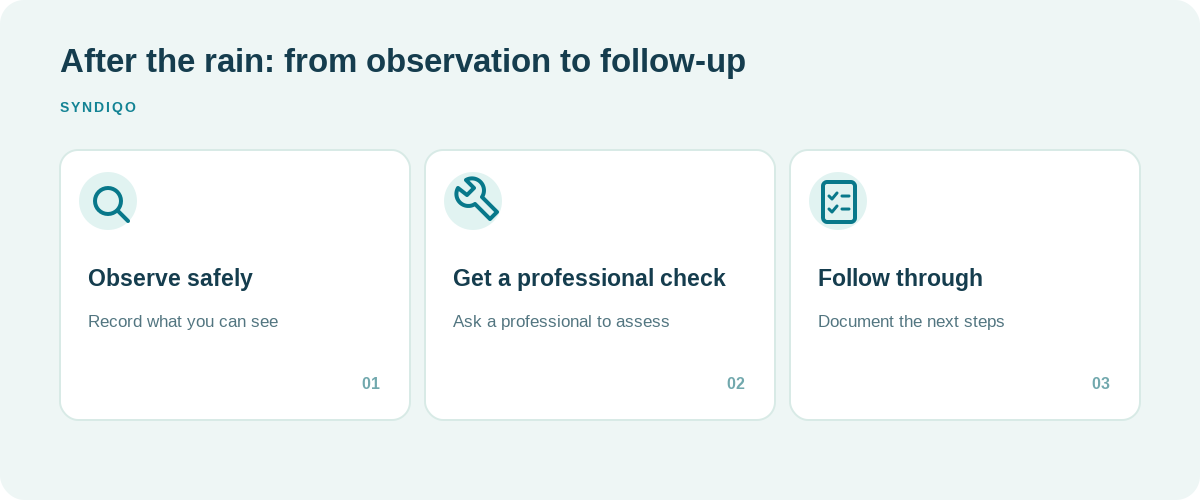
Original illustrations: Syndiqo. They show a follow-up method, not scenes from the storm.
Ask the right people to carry out checks
A damp patch alone cannot tell you whether water is coming from a roof, a pipe or a neighbouring home. Depending on the signs observed, the syndic (property manager) or the person appointed to act may ask qualified professionals to examine waterproofing, rainwater drainage and the shared installations concerned.
After an outage or a leak, have the equipment concerned—such as the lift, gate or electrical installations—assessed before it is put back into service if its condition is uncertain. Ask for a report explaining what was examined, what still needs checking and the next steps. Arrange for temporary repairs to be checked again.
Check contracts before committing to expenses
Gather maintenance contracts, quotations, warranties and, where applicable, the building's insurance policy. Who should be contacted? Which services are included? What conditions and time limits appear in the contract? An occupant may also have their own insurance: collective and individual policies do not necessarily cover the same property or situations.
Contact the relevant insurer to find out what to do and which documents are needed, without waiting until you can explain everything perfectly. Also ask how to preserve useful evidence before any repairs begin, subject to the measures needed to protect people and reduce danger. Decisions about works and how to fund them depend on the circumstances and applicable rules; seek guidance if necessary.
Keep everyone informed, then close the loop
A brief, regular update can be reassuring: “contractor contacted”, “visit scheduled”, “quotation received” or “awaiting technical advice”. If the date changes, say so. After the work, keep the report and check whether a further inspection is planned.
Up-to-date residence information and decisions that are easy to find also help maintain continuity. Syndiqo helps organise residence information and collective decision-making, through to the property manager’s mandate. In a dangerous situation, contact the appropriate responders directly.
A co-ownership cannot stop the rain. It can, however, prepare its contacts, keep information clear and know where to find the next action when the weather settles.