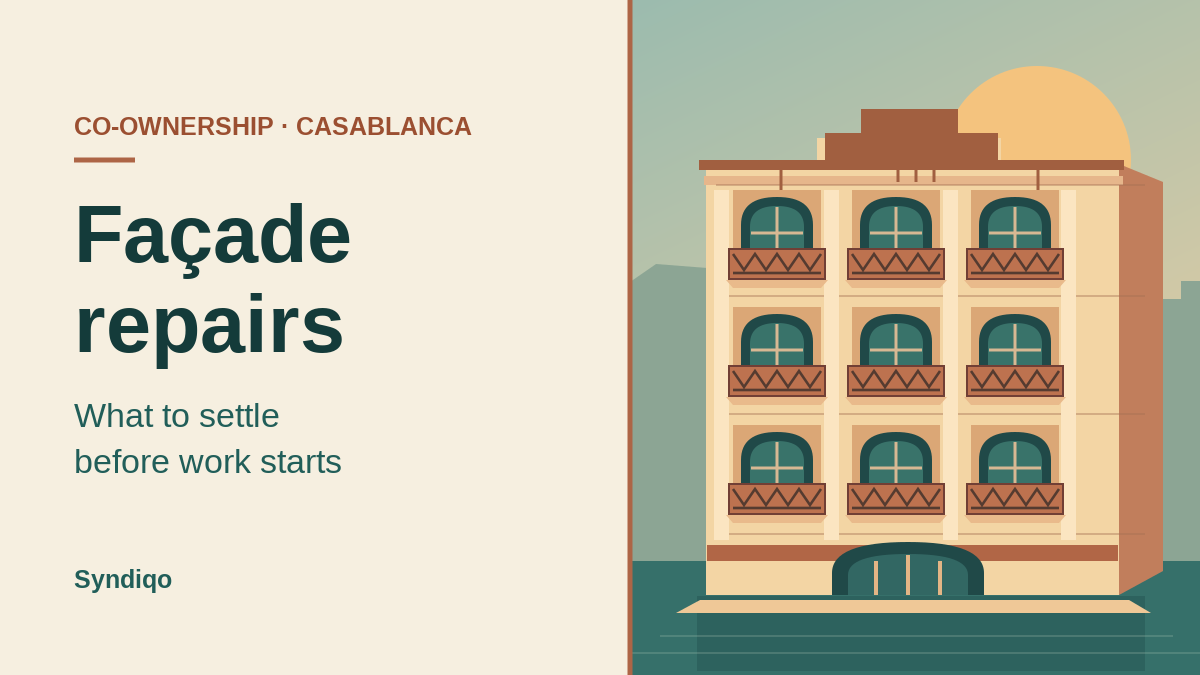
A Casablanca façade needs work: how can co-owners prepare a sound decision?
Imagine a Casablanca residence where the coating above the entrance is crumbling and an original iron railing needs repair. The first quote says it will repair the façade and says nothing about the railing. Before comparing prices, the owners need to know whether the quotes cover the same work.
The building is fictional. In a report published on 16 November 2026, Le Monde described efforts to protect Casablanca's twentieth-century architectural heritage, including Art Deco and modernist buildings, under development pressure. An older façade is not automatically protected.
Protect people first
If material appears likely to fall, keep people away from the danger area where possible without putting anyone at risk, and contact the appropriate services or a qualified professional. Call the emergency services if there is immediate danger. Safety comes first. Take photos and notes only once you can do so safely.
Check the building’s status
Identify the property accurately: name, address and title reference where available. Ask the competent cultural heritage and local planning authorities which heritage status and procedures, if any, apply to that particular building and the proposed work. Do this before requesting a firm quote or commissioning work. A visual resemblance to a listed building is not enough to settle the question.
Order 757.26, dated 8 April 2026 and published in Official Bulletin no. 7510 on 21 May 2026, pages 2846–2847, lists a number of historic Casablanca buildings. It identifies Immeuble Tazi Palace de France in Sidi Belyout as privately owned. Verify the status and procedures for your own address separately.
Ask for a diagnosis before choosing a finish
A photograph can show where the coating is peeling. Finding the cause requires an assessment. Ask a qualified architect or other appropriate professional to assess the visible damage, its possible causes and the safety measures required. Discuss what can be inspected safely and what remains uncertain.
Gather any plans, previous reports and photos taken safely. Consult the co-ownership rules and available records to identify the shared and private elements affected. A new coat of paint may hide a damp patch while the underlying problem continues.
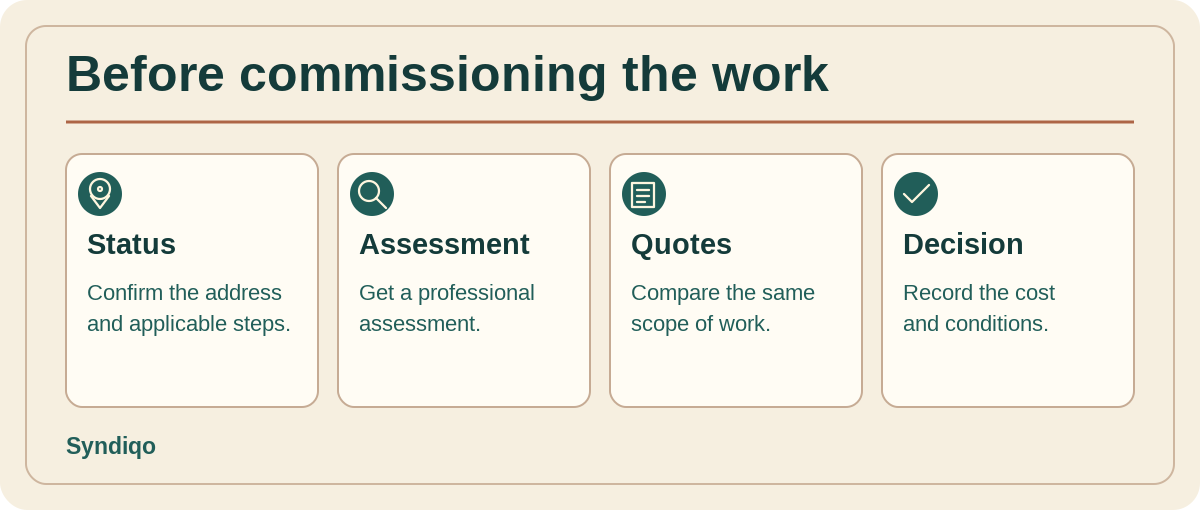
Original Syndiqo illustrations: the façade is fictional and does not depict a listed building.
Compare quotations for the same work
Once the relevant authorities have clarified the applicable process, prepare a common description of the work with the professional's help. Ask what could be repaired or preserved and what, if anything, would need replacement. Give the same scope and known conditions to each contractor for a fair comparison.
Suppose one quote looks cheaper but says nothing about the ironwork. Ask whether the railing is excluded, included elsewhere or still to be assessed. Check the preparation, access arrangements, materials, taxes, exclusions and any provisional items. Where a contractor proposes an alternative, ask them to explain its effect on the scope and cost.
Record the decision and follow the changes
Before work is commissioned, document the scope approved by the collective, the cost and any conditions that remain provisional. Keep the diagnosis and quotations together, and agree who will follow up. During the work, ask for a written explanation of any proposed changes and their cost before accepting them. Keep the completion report and documents the contractor provides.
Syndiqo can help structure a residence's collective decisions. For heritage status, permissions and the choice of work, consult the relevant authorities and qualified professionals.
For a visual introduction, watch France Télévisions' report on Casablanca's architectural heritage (French audio, published 8 September 2026). The Urban Agency's written heritage page is another way to explore the subject.