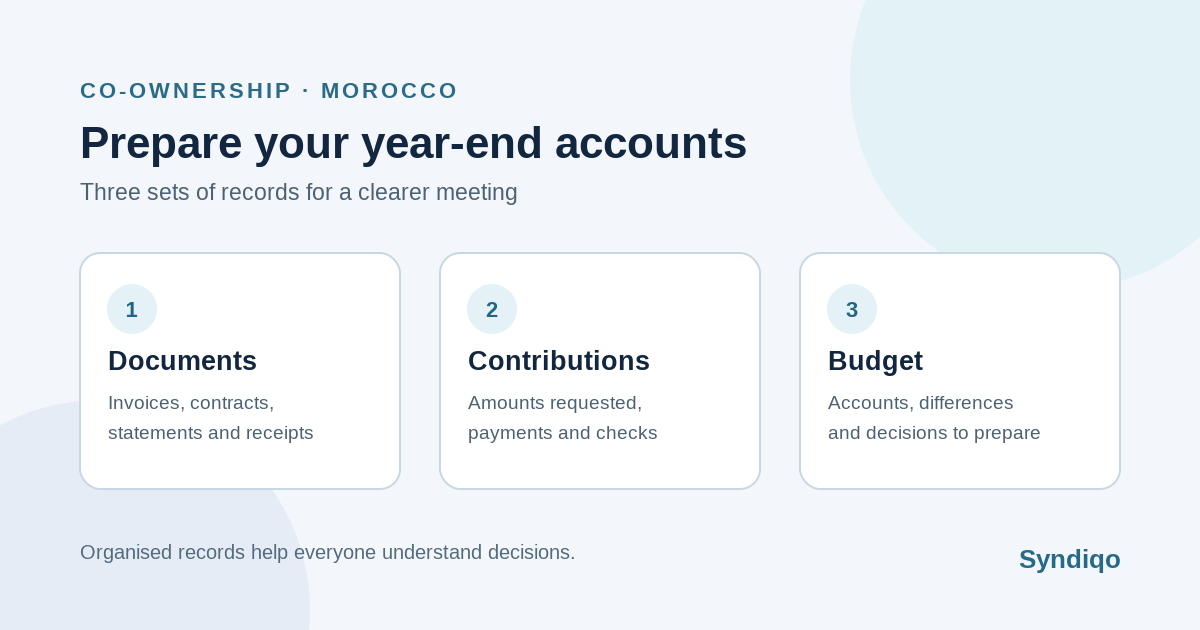
Co-ownership in Morocco: preparing the 2026 year-end accounts
In November, the questions often arrive all at once: why did this expense exceed the budget? Has a contribution that was called for been paid? Where is the maintenance contract? When supporting documents are scattered, even a small residence can spend a great deal of time piecing the year back together.
The end of the 2026 accounting period is a good opportunity to put the records in order. Decree No. 2-23-700 sets accounting rules specifically for associations of co-owners. Its Arabic text was published in Official Bulletin No. 7391 of 31 March 2025; the official French translation appears in Official Bulletin No. 7466 of 18 December 2025. The decree applies from the beginning of the accounting period following its publication. For a residence whose financial year runs from January to December, the period beginning on 1 January 2026 is therefore the first affected. A co-ownership with a different financial year may have been affected from an earlier period, so check its specific dates.
In August 2026, Kassaba was already encouraging property managers to prepare for this year-end close. Here is a practical way to get started without waiting until the day before the general meeting.
1. Confirm the period and gather the starting documents
Begin by noting the opening and closing dates of your accounting period. Then find the budget approved for that period, the previous period's accounts, and the minutes of the general meeting that reviewed them.
These documents provide a point of comparison. If your financial year does not follow the calendar year, or the records involve a particular circumstance, ask the person responsible for the accounts to confirm the period and the applicable rules.
2. Identify the required statements based on the period's income
The decree distinguishes associations according to their income for the accounting period, not the number of units. For the statements mentioned in its first article:
- Up to and including 200,000 DH, the association may limit its statements to annexes 10, 13-1 and 13-2.
- Above 200,000 DH and below 500,000 DH, it may limit its statements to annexes 10, 11 and 12.
- At 500,000 DH and above, it must prepare the statements provided for in annexes 3 to 10.
Annex 10 concerns the tracking of co-owners' contributions. The annexes and their templates appear in the official French text. The thresholds refer to income recognised for the accounting period; do not choose a bracket based only on the bank balance. Ask a qualified professional to confirm the calculation and the statements to be prepared.
3. Gather supporting documents before filling in the tables
Rather than starting with a blank sheet, bring together the documents that explain the figures:
- contribution calls and a record of payments by unit;
- bank statements and cash records, if any;
- supplier invoices, contracts and proof of payment;
- quotations, decisions and progress records for work still under way;
- the approved budget, previous accounts and relevant general meeting decisions.
For each missing document, note whom to contact and when to follow up. A simple table with “document”, “period”, “person responsible” and “status” is enough to begin. Keep sensitive documents in a space accessible only to authorised people.
4. Explain differences instead of merely noting them
Compare actual spending with the approved budget: a higher figure may reflect an urgent repair, a late invoice or an expense recorded under the wrong category. The amount alone cannot tell you which of these happened.
Do the same for contributions: distinguish amounts called for, payments received and items that need checking. A difference does not automatically mean a co-owner is late; a payment may still be awaiting reconciliation or need correcting. Check the supporting documents before following up, and avoid publicly sharing individual financial information.
5. Prepare a meeting that can make decisions
Once the accounts are ready, plan a presentation that people can follow: the approved budget, the accounts for the closed period, explanations of the main differences, a comparison with the previous period and the proposed budget for the next one. Annex 1 of the decree describes how accounts and the budget are presented to the general meeting; the statements to be prepared still depend on the association's circumstances.
Also identify the questions that require a decision and the documents co-owners will need to examine. The accounts' closing date and the meeting date are not necessarily the same: plan the timetable with the rules and regulations applicable to your residence in mind.
Syndiqo helps people involved in a co-ownership organise residence information, prepare meetings and keep a record of decisions. Preparing and validating the accounting statements requires its own work; seek professional support when needed.
The takeaway: first identify your accounting period and income bracket, then gather the supporting documents and prepare a clear explanation of any differences. A few checks now can make the discussion at the general meeting far more useful.
This article provides general information and is not a substitute for accounting or legal advice tailored to your co-ownership. Check the applicable text and the particulars of your accounting period with a qualified professional.